

That Odd Speck Drifting Across Your Vision
You're reading, or staring at a bright wall, and there it is. A tiny thread, a cobweb, a dark dot that slides away when you try to look straight at it. Annoying? Yes. Dangerous? Sometimes, and that's exactly why people should know the difference.
At Faridabad Eye Care Centre, Dr. Vikas Thukral often meets patients who ignored these signs for weeks, then rush in worried. Understanding eye floaters and flashes of light helps you stay calm when it's harmless and act fast when it isn't.
What Exactly Are Floaters?
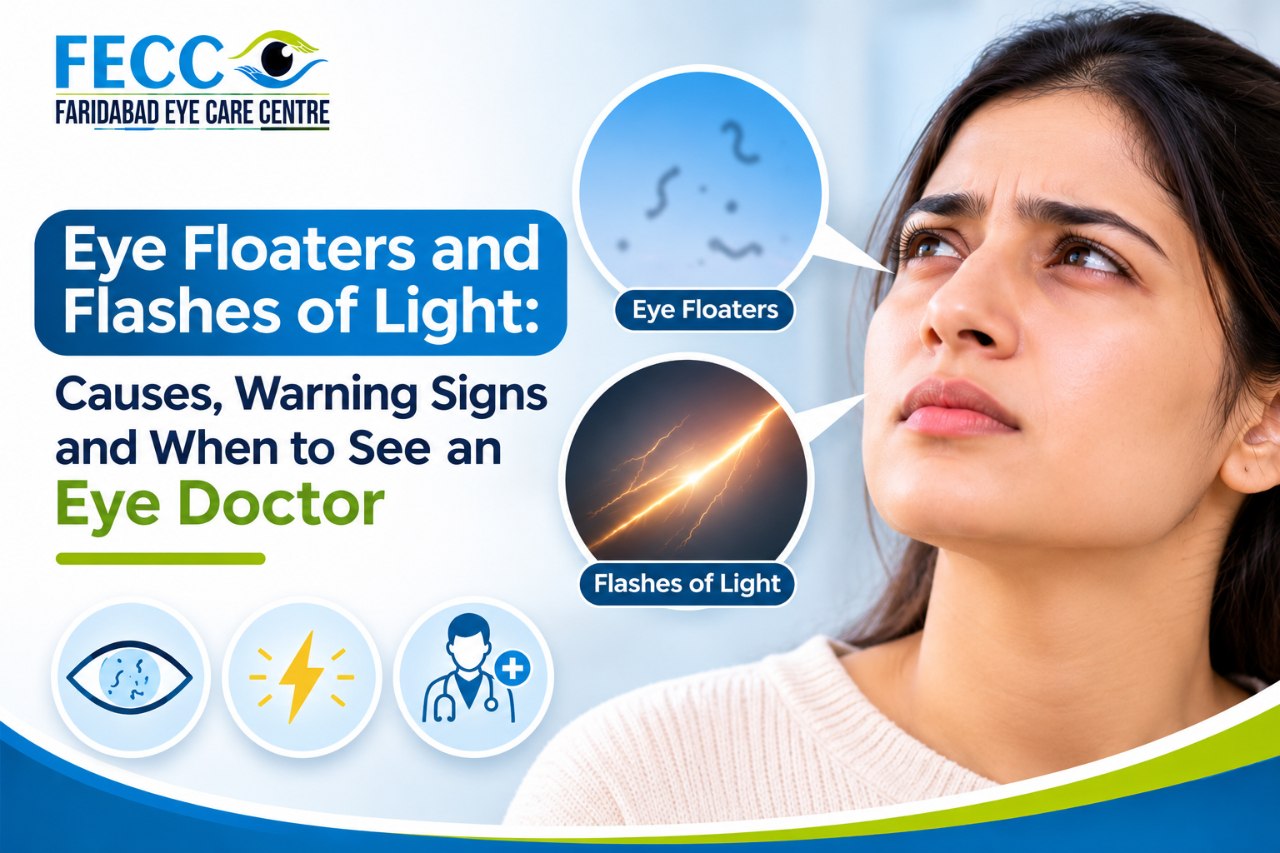
Inside your eye sits a clear, jelly-like substance called the vitreous. With age, it slowly shrinks and clumps. Those clumps cast tiny shadows on the retina, the light-sensitive layer at the back of the eye. You see the shadows as spots, strings or rings.
They're most visible against plain bright backgrounds, like a white wall, a clear sky or a blank computer screen.
And the Flashes?
Flashes look like lightning streaks or twinkling sparks, usually in the corner of your vision. They happen when the vitreous tugs on the retina. The retina can't tell the difference between light and a pull, so it simply reports "light."
Common Causes
Not every cause is scary. Many simply come with the passing of years. Here's the full picture:
- Age-related changes in the vitreous, mostly after 50, but earlier in some people
- Posterior vitreous detachment, where the vitreous separates from the retina
- Short-sightedness, since longer eyes are more prone to early vitreous changes
- Eye surgery or injury, including cataract surgery
- Inflammation inside the eye
- Bleeding in the eye, sometimes linked to diabetes
- Retinal tears or detachment, the serious one
- Migraine aura, which can cause flashes in both eyes without any retinal problem
Warning Signs That Need Attention
Here's the part that matters. Please read it twice.
- A sudden shower of new floaters, like someone shook a snow globe
- New flashes of light, especially if they keep repeating
- A dark curtain or shadow creeping in from the side or the top
- Blurred or reduced vision in one eye
- Floaters that appear after an eye injury or recent surgery
Any of these can point to a retinal tear or detachment. And retinal detachment is an emergency. The sooner it's treated, the better the chance of saving vision.
So, When Should You See an Eye Doctor?
Quick rule of thumb: new symptoms mean a check, and sudden symptoms mean a check today. Don't wait for the weekend to pass. Don't wait for the spot to "settle down".
Even if nothing alarming is happening, get your eyes examined if you notice floaters for the first time, you're diabetic, you're highly short-sighted, or you've had eye surgery before.
What Happens at the Eye Exam?
Painless, mostly. The doctor puts in dilating drops to widen the pupil so they can see the entire retina. Vision stays blurry and light-sensitive for a few hours, so bring someone to accompany you and carry sunglasses. The doctor checks the vitreous and the retina and may use a scan or photographs if needed.
Treatment Options
- Observation: Most floaters need nothing. The brain learns to ignore them over time.
- Laser treatment: A laser seals a retinal tear before it turns into a detachment.
- Surgery: Needed for retinal detachment, and sometimes for heavy bleeding inside the eye.
- Treating the underlying cause, such as controlling blood sugar or managing inflammation.
Things You Shouldn't Do
- Don't rub your eyes hard when you see floaters.
- Don't rely on internet remedies or random supplements.
- Don't assume it's only tiredness, especially after long screen days.
- Don't skip follow-up visits. A tear can appear days after the first exam.
Living With Harmless Floaters
If your doctor confirms they're benign, try not to obsess. Looking up and down moves them out of the way. Better lighting helps. Over weeks and months, most people simply stop noticing.
Still, remember one thing. A change is a signal. If your usual set of floaters suddenly increases, or the flashes return, get checked again.
Knowing the difference between a nuisance and a warning makes all the difference with eye floaters and flashes of light. When in doubt, don't gamble with your vision. The eye care team at Faridabad Eye Care Centre is available for a detailed retinal examination whenever you need peace of mind.