

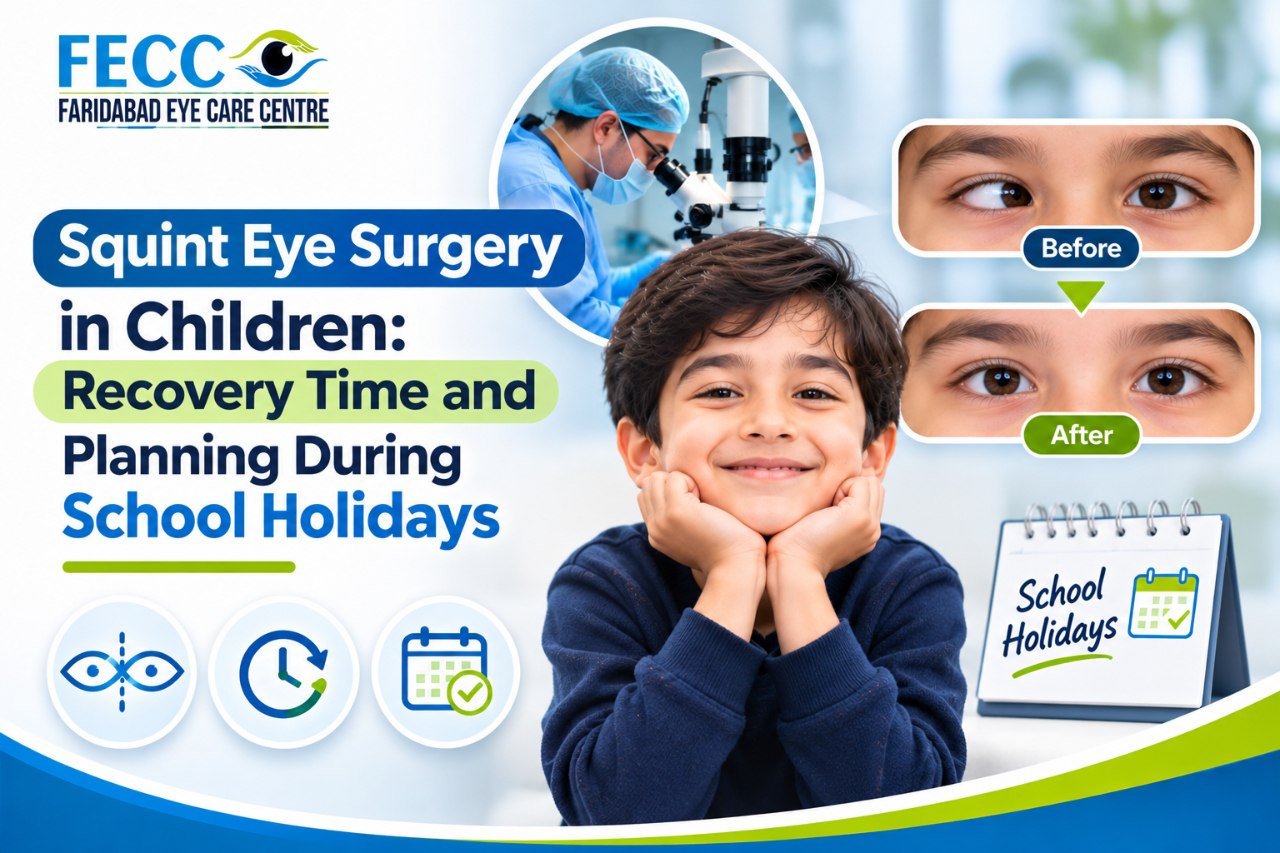
The Holiday Question Every Parent Asks
"Can we get it done during the break?" It's probably the first thing parents ask Dr. Vikas Thukral at Faridabad Eye Care Centre once surgery for a child's crossed or drifting eye is on the table. Fair question. Nobody wants a child missing exams or lessons, and winter vacations offer a neat window.
So let's talk about squint eye surgery in children, what recovery actually looks like, and how to plan the weeks around it without losing your sanity.
First, What Is a Squint?
A squint, also called strabismus, means the two eyes don't point in the same direction. One may turn inward, outward, upward or downward. Sometimes it shows all the time. Sometimes only when the child is tired or unwell.
It isn't just about looks. A misaligned eye can send mixed signals to the brain, which may start ignoring the weaker eye. That's called amblyopia, or lazy eye, and it's the real reason doctors push for timely assessment.
Surgery adjusts the eye muscles so the eyes sit straighter. Glasses, patching or exercises may also be part of the plan, depending on the child.
What Happens on the Day?
Children are usually given general anaesthesia, so they sleep through the procedure and feel nothing. Many go home the same day. The stitches used are normally dissolvable, which means nobody has to wrestle a nervous child back to the clinic to get them removed.
Recovery Time: What to Expect
Every child heals at their own pace, and your surgeon will give specific advice. Still, here's a broad picture.
- First 24 to 48 hours: Sleepy, a bit cranky, maybe slightly nauseous after anaesthesia. The eye may water and feel scratchy.
- First week: Redness is common, and it can look dramatic. Parents often panic at the sight of a bloodshot eye. It usually looks worse than it feels.
- One to two weeks: Redness fades gradually. Most children are comfortable enough to go back to school around the one-week mark, if their doctor agrees.
- Four to six weeks: The eye settles, and the doctor checks alignment and vision during follow-ups.
Some kids complain of double vision for a short while. The brain usually adapts, but tell your doctor if it lingers.
Planning Around the School Calendar
Holidays are great, but they have a catch. Don't book surgery for the final days of the break and hope for the best. Aim to operate early in the vacation so there's time for the first week of redness, the early follow-up, and a buffer for surprises.
A few practical points:
- Get the pre-surgery check done well before the holidays begin.
- Confirm dates for anaesthesia clearance and any blood tests.
- Keep the last week of vacation free for follow-up visits.
- Tell the school if your child will skip physical education or swimming for a couple of weeks.
- Arrange a parent or grandparent to stay home with the child for the first few days.
Looking After Your Child at Home
Little ones don't understand "please don't rub your eye”. So make it easy for them.
- Give prescribed drops on time. Turn it into a game if you must.
- Keep hands clean and nails trimmed.
- Avoid swimming pools, dusty playgrounds and muddy football for about two weeks, or as advised.
- Limit long screen sessions. Tired eyes heal slowly, and honestly, kids don't need an excuse to watch more cartoons.
- Offer soft, comforting foods on the first day.
Common Worries, Answered Briefly
Will the eye need a patch? Sometimes, but not always. Your surgeon will decide.
Is a second surgery possible? Occasionally yes. Alignment can shift as a child grows, and that's something doctors discuss in advance.
Is it painful? Mild discomfort, usually controlled with prescribed medicines.
When to Call the Doctor
Reach out quickly if you notice heavy bleeding, swelling that keeps growing, thick discharge, fever or sudden worsening of pain.
Don't Wait Too Long
Squints rarely fix themselves, and delays can affect vision development. If you suspect your child's eyes aren't lined up, get them checked now, not after the next exam season.
For families considering squint eye surgery in children, a clear plan and an early start make the holiday window genuinely useful. The paediatric eye team at Faridabad Eye Care Centre is happy to help you build a schedule that works for your child and your calendar.